How to Clean Brass and Copper the Right Way
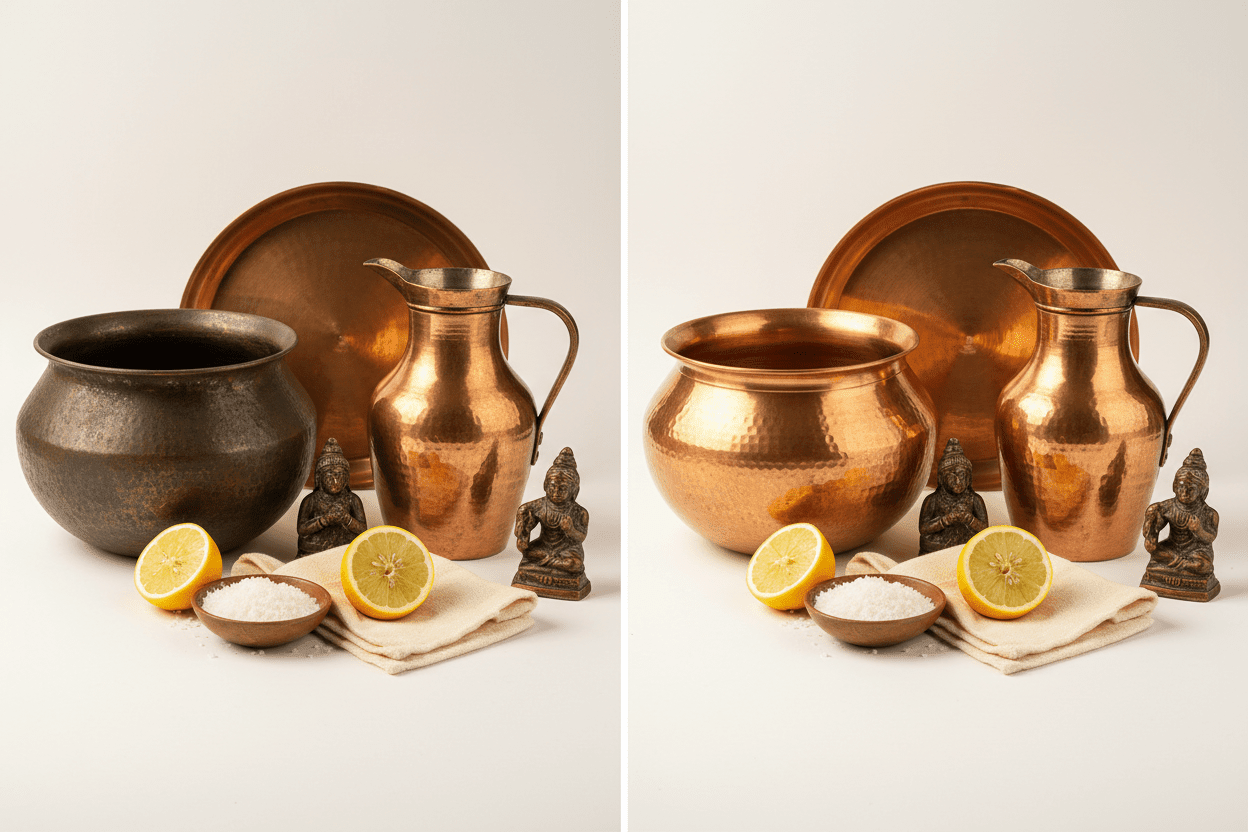
Your brass vessel has developed a dark, mottled layer. Tarnish. It looks aged, neglected, dull. The impulse is to panic and reach for chemicals. Don't. The same simple ingredients your grandmother used—lemon and salt—will restore it to mirror shine in less time than it takes to brew tea.
Why brass and copper tarnish
Tarnish is not damage. It is oxidation—a natural chemical reaction when copper or brass is exposed to oxygen and moisture in the air. Over time, a thin layer of copper oxide (in copper vessels) or copper sulfide (in brass, which is copper-zinc alloy) builds on the surface. This layer is the dark or greenish patina you see.
This is not weakness. It is age. The vessel is fine. The patina is simply character being written onto the metal by time.
The lemon and salt method
This is the fastest, most effective method for restoration.
What you need:
- One fresh lemon (or 2 tablespoons lemon juice)
- One tablespoon of salt (table salt or sea salt)
- A soft cloth or sponge
- Warm water
Steps:
- Cut the lemon in half. Dip the exposed flesh into salt until it is coated. The salt acts as an abrasive. The lemon juice provides acid—specifically citric acid—which dissolves the oxide layer.
- Rub the vessel. Using the salt-coated lemon half, rub the tarnished areas of the vessel in circular motions. Apply moderate pressure. You will feel the abrasive texture working. The salt is removing the oxidized layer. The acid is breaking the chemical bonds holding the patina in place.
- Watch the shine return. Within 20 to 30 seconds per area, the original metal beneath will emerge. Dark tarnish will transform to bright, clean brass or copper. If the vessel has heavy tarnish, you may need to rub a bit longer, or repeat with a fresh lemon half.
- Rinse thoroughly. Rinse the vessel under warm running water to remove all salt and lemon residue. Use your cloth to wipe away any remaining particles.
- Dry completely. Pat the vessel dry with a clean cloth. If water droplets remain, they will begin new oxidation immediately.
Time required: 5 minutes for most vessels. Heavier tarnish may require 10 minutes, but this is rare.
The tamarind paste method
Tamarind is equally effective and works through the same principle: acidity dissolves the oxide layer. This is the traditional method used in India for centuries.
What you need:
- Tamarind pulp (the brown paste you can buy dried, or fresh if available)
- A pinch of salt (optional, acts as a mild abrasive)
- A soft cloth
Method: Apply the tamarind paste directly to the tarnished area. Rub gently with a cloth for 2 to 3 minutes. The acidity of tamarind will dissolve the patina. Rinse thoroughly and dry.
Tamarind is slower than lemon-salt but is gentler if you prefer minimal abrasion, and it smells better than salt.
What NOT to use
Dishwasher: Never put brass or copper in the dishwasher. The high heat, harsh detergents, and prolonged contact with alkaline chemicals will accelerate corrosion and dull the finish permanently. Hand wash only.
Steel wool or abrasive scrubbers: These will scratch the metal surface, leaving visible marks and micro-gouges. The lemon-salt method is abrasive enough for cleaning without scratching.
Commercial brass polishes with harsh chemicals: Many contain caustic compounds that strip away protective layers and accumulate on the metal over time. Lemon and salt are fully biodegradable and leave no residue.
Vinegar alone: Vinegar is acidic, but without an abrasive component, it is slower than lemon-salt and less effective. The salt is doing most of the work.
On patina: when to clean, when to keep
There is a philosophy to tarnish. A thin, even patina is not damage—it is authenticity. Some people prefer the look: the aged, collected appearance of a vessel that has been used and lived with.
The question is not "should I clean it?" but "do I want to?" If your vessel has light patina and you like how it looks, leave it. If you want the original shine restored, clean it. Both are correct.
What matters is that you can choose. A pure brass or copper vessel can be cleaned and restored endlessly. A coated or plated vessel cannot. Once the coating begins to chip or scratch, you cannot restore it. It will only deteriorate.
Storage to slow tarnishing
Tarnish forms because of exposure to oxygen and humidity. You cannot stop it entirely, but you can slow it.
- Store in a cool, dry place. High humidity accelerates oxidation. If you keep your vessel in a dry cupboard rather than on a humid kitchen counter, tarnishing will be noticeably slower.
- Avoid prolonged contact with water. If your vessel is wet, dry it immediately. Standing water is an ideal environment for patina formation.
- Avoid acidic foods or water. Acidic substances accelerate copper leaching and oxidation. Don't store lemon water or vinegar in your vessel for extended periods.
- Minimize air exposure. If you want to preserve shine, some people wrap their vessels lightly in cloth. This is optional and only necessary if you use the piece rarely.
The permanence of pure metal
This entire method works because your vessel is pure metal. Solid brass. Solid copper. The material can be tarnished and cleaned, tarnished and cleaned again, indefinitely. Each cleaning reveals the same bright metal beneath.
A copper-plated pot or vessel cannot be restored this way. Once the plating scratches and the base metal beneath begins to oxidize, there is no recovery. The coating is done.
When you clean a House of Dhatu vessel with a lemon and salt, you are not repairing it. You are simply removing what the air and time have written on it. The vessel itself—the structure, the integrity, the purity—remains unchanged. This is what permanence feels like.